Physical Address
304 North Cardinal St.
Dorchester Center, MA 02124
Physical Address
304 North Cardinal St.
Dorchester Center, MA 02124

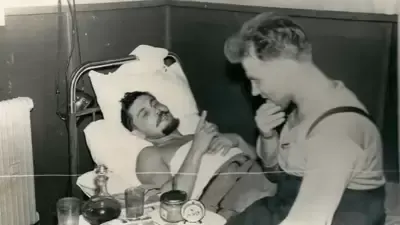
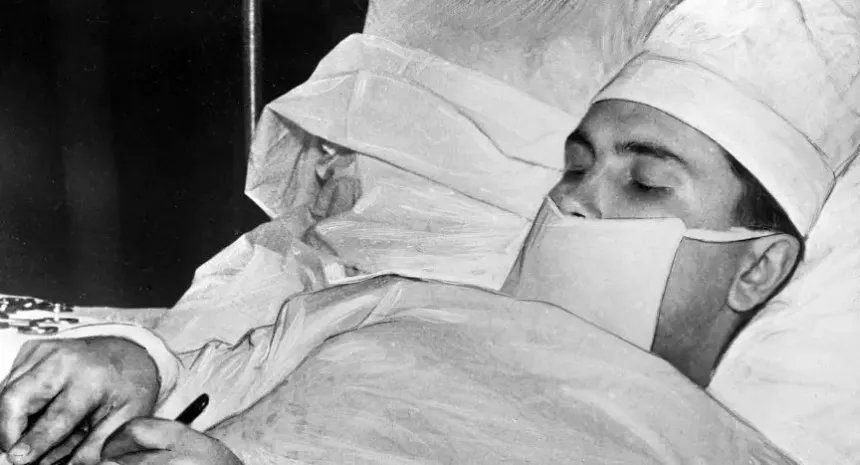
In 1961, deep in Antarctica, a young Soviet doctor faced a situation that sounds more like fiction than reality. There were no hospitals, no backup surgeons, and no way out. When a life-threatening condition struck, he was left with a single, terrifying option.
He would have to operate on himself.
This is the true story of Leonid Rogozov, the man who performed his own appendectomy and lived to tell the story.
At just 27 years old, Rogozov was selected to join the Sixth Soviet Antarctic Expedition. He was stationed at Novolazarevskaya Station, a remote research base surrounded by endless ice and some of the harshest conditions on Earth.
As the expedition’s only physician, Rogozov carried full responsibility for the health of the entire team. If anything went wrong, there would be no second opinion, no specialist to call in—just him.
For months, the mission went smoothly. But by late April 1961, Rogozov began to feel unwell. What started as mild discomfort quickly escalated into fever, nausea, and a sharp, localized pain in his lower abdomen.
He didn’t need anyone else to confirm it.
He was suffering from acute appendicitis.
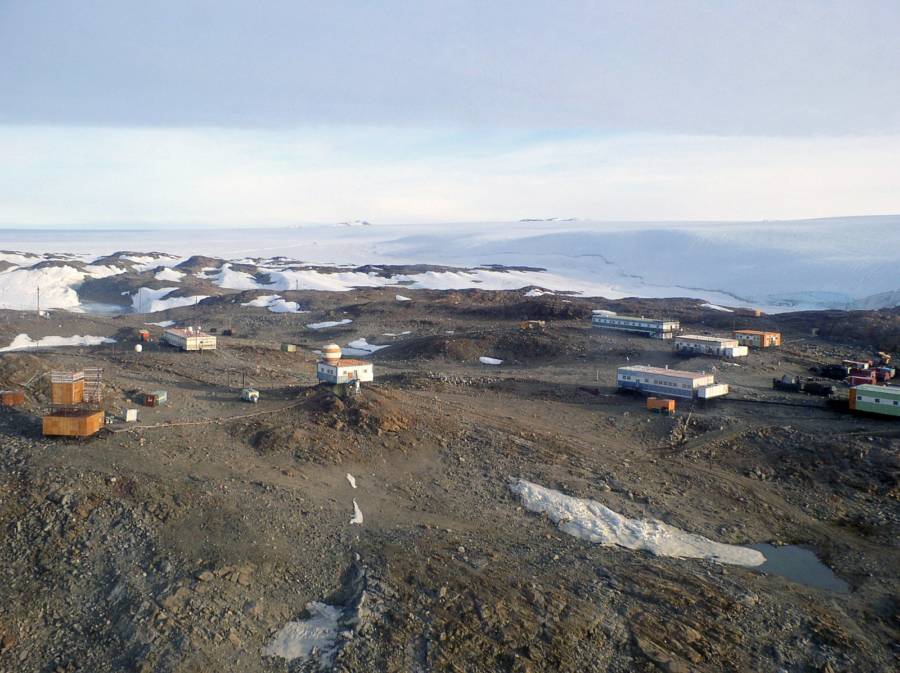
Under normal circumstances, appendicitis is routine to treat. In Antarctica, it becomes something far more dangerous.
The nearest help was over a thousand miles away. Violent storms made evacuation impossible, and aircraft couldn’t land in the worsening weather. There were no other doctors at the station, and the men around him had no surgical training.
Rogozov initially tried to manage the condition with rest and medication, hoping the inflammation might subside. But he knew better than anyone that time was running out. If his appendix ruptured, the resulting infection would almost certainly be fatal.
As his condition deteriorated, the reality became unavoidable.
If he didn’t act, he would die.
Operating on yourself is almost unimaginable. It requires not just medical knowledge, but the ability to suppress pain, fear, and instinct at the same time.
Rogozov understood the risks. He also understood that waiting was no longer an option.
So he made the decision to perform the surgery himself.
He prepared as carefully as possible under the circumstances. Two of his colleagues were assigned to assist him, despite having no medical experience. Their job was simply to hand him instruments and hold a mirror so he could see what he was doing.
There would be no general anesthesia. He needed to remain conscious and in control throughout the procedure.
On May 1, 1961, Rogozov lay down in a semi-reclined position and injected a local anesthetic into his abdomen. Once the area was numb, he made the first incision.
From that point on, everything became a test of endurance.
Working partly with a mirror and partly by feel, he carefully navigated through layers of tissue. The conditions were far from ideal. His visibility was limited, his body was weakening, and waves of nausea made concentration difficult.
At several points during the operation, he was forced to stop. Dizziness would set in, and he had to pause just to regain enough strength to continue.
Despite this, he pressed forward.
The situation became even more dangerous when he accidentally damaged part of his intestine and had to repair it before continuing. Every additional complication increased the risk, but turning back was not an option.
After nearly two hours of operating on himself, Rogozov finally located the appendix. It was badly inflamed and close to rupturing.
He removed it.
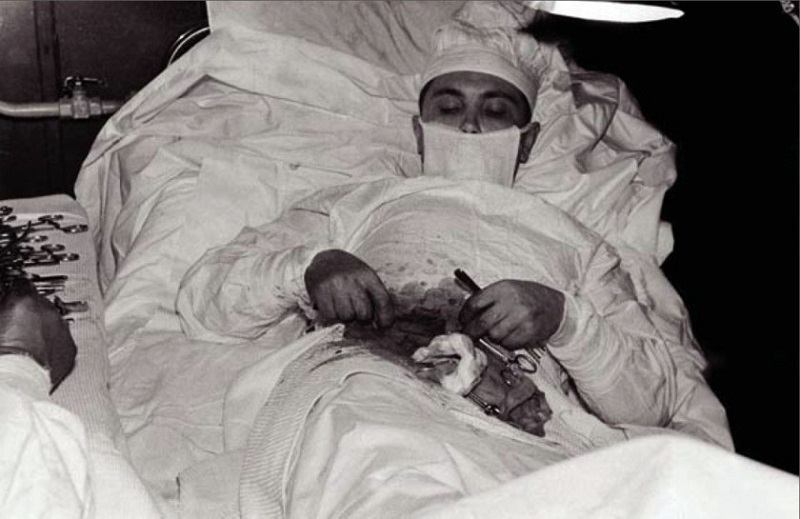
By the early hours of the morning, the surgery was complete. Exhausted and in pain, Rogozov treated the wound with antibiotics and closed the incision.
The next few days were critical. Infection, shock, or complications could still take his life.
But gradually, his condition began to improve.
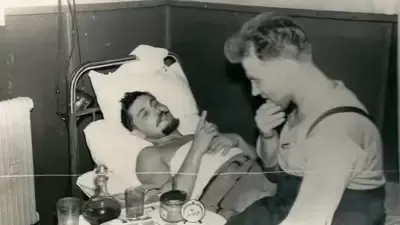
Within a few days, his fever subsided. A week later, his stitches were removed. Not long after that, he returned to his duties at the station as if nothing had happened.
Against all odds, he had survived.
Rogozov’s case quickly gained attention, not just for its sheer improbability, but for what it revealed about the dangers of isolation.
Following the incident, Antarctic expeditions began implementing stricter medical protocols. Greater emphasis was placed on contingency planning, ensuring that no team would again be left so vulnerable.
For his actions, Rogozov was awarded one of the Soviet Union’s highest civilian honors, recognizing both his skill and his extraordinary composure under pressure.
After returning from Antarctica, Rogozov continued his career in medicine, eventually becoming a respected surgeon and academic. He lived a relatively quiet life compared to the extraordinary moment that defined his legacy.
He passed away in 2000, but his story continues to be told as one of the most extreme examples of human survival ever recorded.
There are countless survival stories, but very few come close to this level of intensity.
Rogozov wasn’t fighting an external threat. He wasn’t escaping danger or enduring harsh conditions—he was forced to turn inward, confronting a life-or-death situation within his own body.
What makes his story so powerful isn’t just the act itself, but the mindset behind it. The ability to stay focused, make precise decisions, and carry out a complex medical procedure under those conditions is something most people can barely comprehend.
In a place as unforgiving as Antarctica, survival often depends on preparation, teamwork, and a bit of luck. But in Rogozov’s case, survival came down to something far more personal.
Skill. Discipline. And the willingness to do what had to be done, no matter how extreme.
When faced with the impossible, Leonid Rogozov didn’t hesitate.
He picked up a scalpel—and saved his own life.