Physical Address
304 North Cardinal St.
Dorchester Center, MA 02124
Physical Address
304 North Cardinal St.
Dorchester Center, MA 02124



In the early 20th century, adoption in America was supposed to be an act of compassion—a way to give children better lives. But in Memphis, Tennessee, one woman quietly turned that system into something far darker.
Her name was Georgia Tann, and for more than two decades, she operated what would become one of the most disturbing child trafficking operations in American history.
By the time the truth surfaced, thousands of children had been taken, families had been torn apart, and a system built on trust had been corrupted from the inside.
Georgia Tann was born in 1891 in Philadelphia, Mississippi. She came from a relatively educated background and eventually attended college, later working in social services—a profession that would give her both access and authority.
From the outside, her career seemed respectable. She positioned herself as someone dedicated to helping children—especially those from struggling families.
But even early in her career, there were warning signs.
Before moving to Memphis, Tann had already faced criticism and job loss due to questionable practices involving child placements.
Instead of stopping, she relocated—and escalated.
In the 1920s, Tann took control of the Memphis branch of the Tennessee Children’s Home Society, an organization that was supposed to help place orphaned or neglected children into stable homes.
Instead, she turned it into a front.
From roughly 1924 to 1950, Tann used the organization to run a black market adoption ring, ultimately trafficking an estimated 5,000 children.
These weren’t all orphans.
Many weren’t even abandoned.

Tann’s operation was built on deception, coercion, and outright kidnapping.
Children were taken in multiple ways:
In many cases, families never saw their children again.
Once she had the children, Tann created a pipeline to wealthy adoptive families across the United States.
To adoptive parents, it often looked legitimate.
To the biological families, it was disappearance.
Tann didn’t operate alone.
She built relationships with powerful figures, including judges and political leaders in Memphis. One key ally was juvenile court judge Camille Kelley, who helped legitimize the removal of children from their families.
Her connections allowed her to:
For years, authorities either ignored the signs—or actively enabled her.

While Tann marketed her organization as a place of care, conditions inside were often horrific.
At least 19 children are believed to have died due to abuse or neglect within her system.
Some children who survived were placed into homes where they were exploited for labor or subjected to further abuse.
Tann’s operation wasn’t hidden in the shadows—it reached into elite circles.
Among those who adopted children through her network were:
This further shielded her from suspicion. Her clients had no reason to question the system—they believed they were participating in legitimate adoptions.

By the late 1940s, suspicions had grown too large to ignore.
In 1950, Tennessee officials launched an investigation into the Tennessee Children’s Home Society after allegations surfaced that children were being sold for profit.
Evidence quickly mounted.
The system was corrupt. The adoptions were fraudulent. The scale was massive.
But justice would never come in the way many expected.
Just as the investigation began closing in, Georgia Tann died in September 1950 from cancer.
She was never arrested.
She was never tried.
She never publicly answered for what she had done.
Shortly after her death, the Tennessee Children’s Home Society was shut down.
The state later pursued financial claims against her estate, but the damage had already been done.
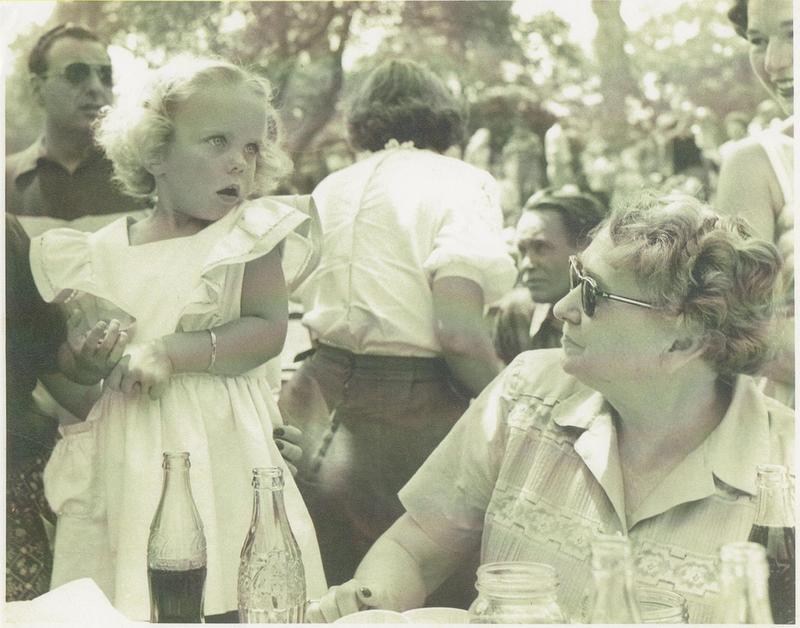
The true impact of Tann’s actions didn’t end in 1950.
For decades, families searched for answers:
Some reunions did happen—often by chance, sometimes decades later—but many families were never reunited.
Ironically, the crimes of Georgia Tann helped reshape the adoption system in the United States.
Public outrage led to:
Her legacy is complicated.
On one hand, she exploited and destroyed lives.
On the other, her crimes exposed a broken system that had gone largely unchecked.
Georgia Tann didn’t just steal children—she exploited trust.
She took advantage of vulnerable families, manipulated the legal system, and built an operation that thrived for decades in plain sight.
What makes her story especially unsettling isn’t just the scale.
It’s how long she got away with it.
Thousands of children disappeared into a system that was supposed to protect them—and for years, no one stopped it.