Physical Address
304 North Cardinal St.
Dorchester Center, MA 02124
Physical Address
304 North Cardinal St.
Dorchester Center, MA 02124

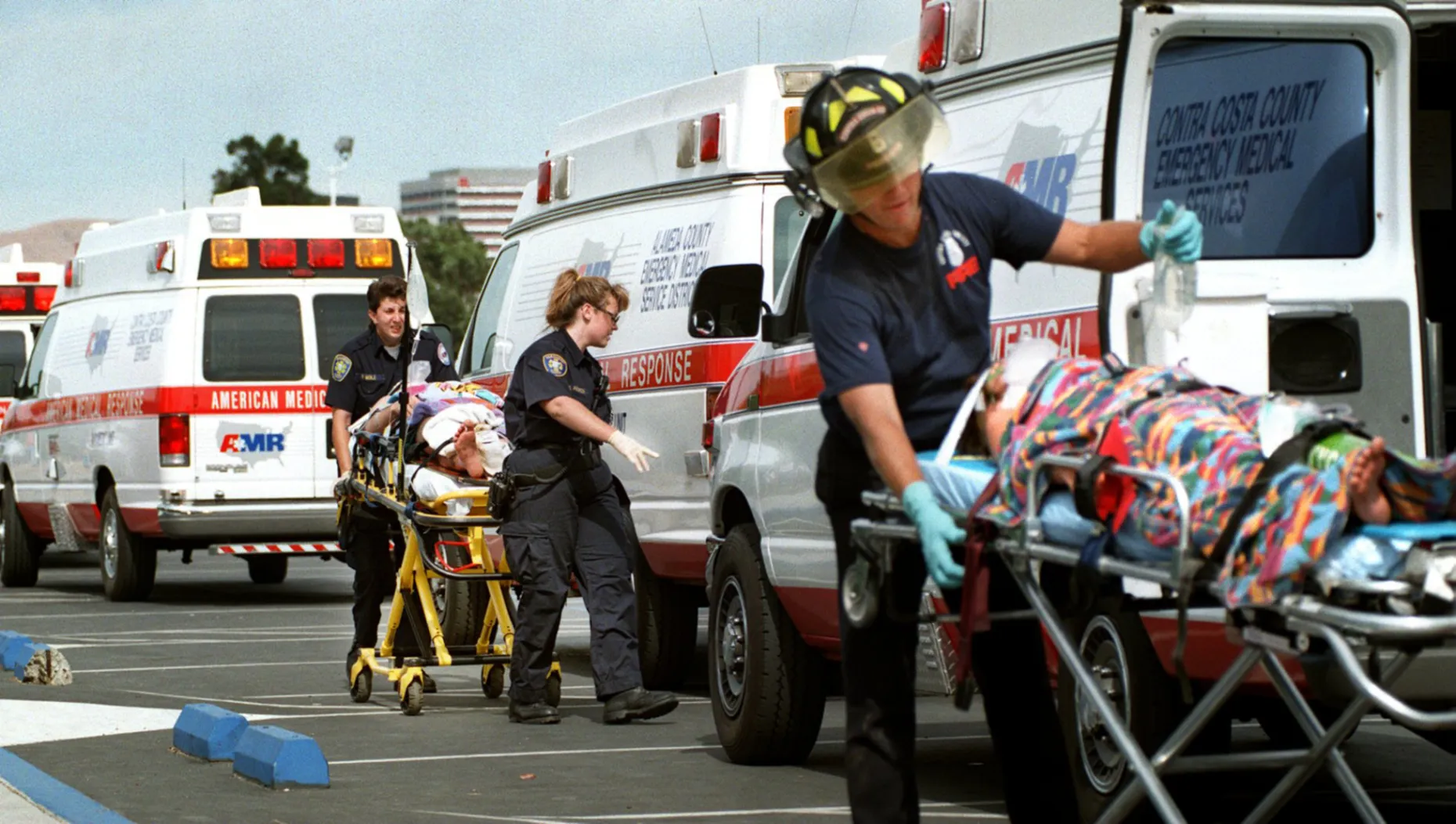
On June 2, 1997, what was supposed to be one of the happiest days of a group of high school seniors’ lives ended in horror.
At a water park in Concord, California, a reckless tradition, ignored warnings, and a catastrophic structural failure collided in a matter of seconds—leaving dozens injured and one young woman dead.
This is the full story of the Concord Water Park disaster.
In early June 1997, seniors from Napa High School were just days away from graduating.
Like many graduating classes before them, they planned a celebratory trip—a final send-off before adulthood. The destination was Waterworld USA in Concord, California, a relatively new water park that had opened just two years earlier in 1995.
The atmosphere that day was exactly what you’d expect: loud, carefree, and full of anticipation. Students ran between attractions, soaking in what felt like one of the last truly carefree days of their youth.
But among the students, there was something more than just celebration.
There was a challenge.
For years, graduating seniors had engaged in a reckless stunt at water parks—trying to cram as many people as possible onto a single water slide at once.
It wasn’t an official event. It wasn’t organized by the park. It was a student-led tradition rooted in thrill-seeking and peer pressure.
The goal was simple: break the record.
On that day, the target was the Banzai Pipeline, a towering waterslide that rose several stories high. According to reports, students had already been warned about overcrowding rides. Lifeguards were trained to send riders down one at a time to prevent accidents.
But the seniors had something else in mind.
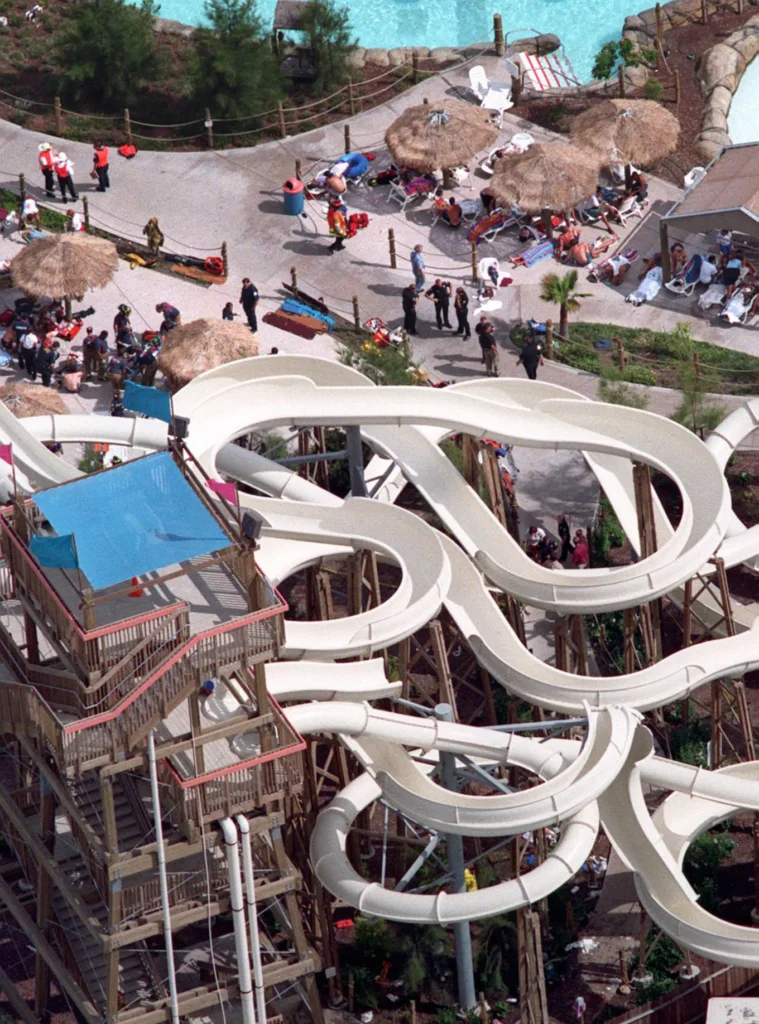
As the afternoon went on, the group gathered at the top of the Banzai Pipeline.
A lifeguard attempted to maintain order—letting riders go one by one, as required. But the situation quickly spiraled out of control.
Dozens of students surged forward, overwhelming the lifeguard.
Some accounts say they were rushing to get “one last ride” before it was time to leave. Others say they were actively trying to beat a long-standing record.
Either way, the result was the same.
Around 30 or more teenagers packed themselves into the slide at once—far beyond what it was designed to handle.
They clung to the sides of the chute, stacking their weight onto a structure never meant to support it.
And then—
It gave way.
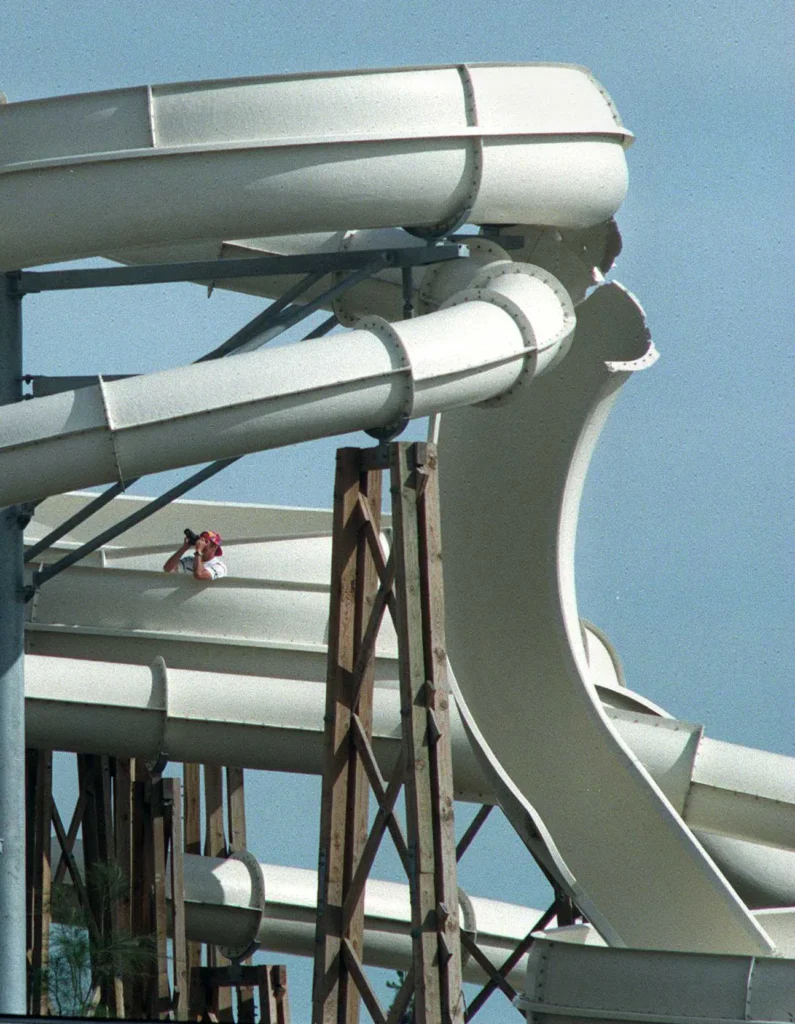
At approximately 3:30 p.m., witnesses heard cracking sounds—followed by screams.
The Banzai Pipeline began to fail.
The structure collapsed under the immense weight, sending students plummeting from heights estimated between 30 and 75 feet.
What followed was chaos.
Bodies tumbled through the air. Some struck parts of the slide as it broke apart. Others hit the ground below—cement, dirt, and shallow water offering little protection.
Witnesses described horrifying scenes.
One report stated that, in the aftermath, the slide was streaked with blood, and injured students lay scattered at its base.
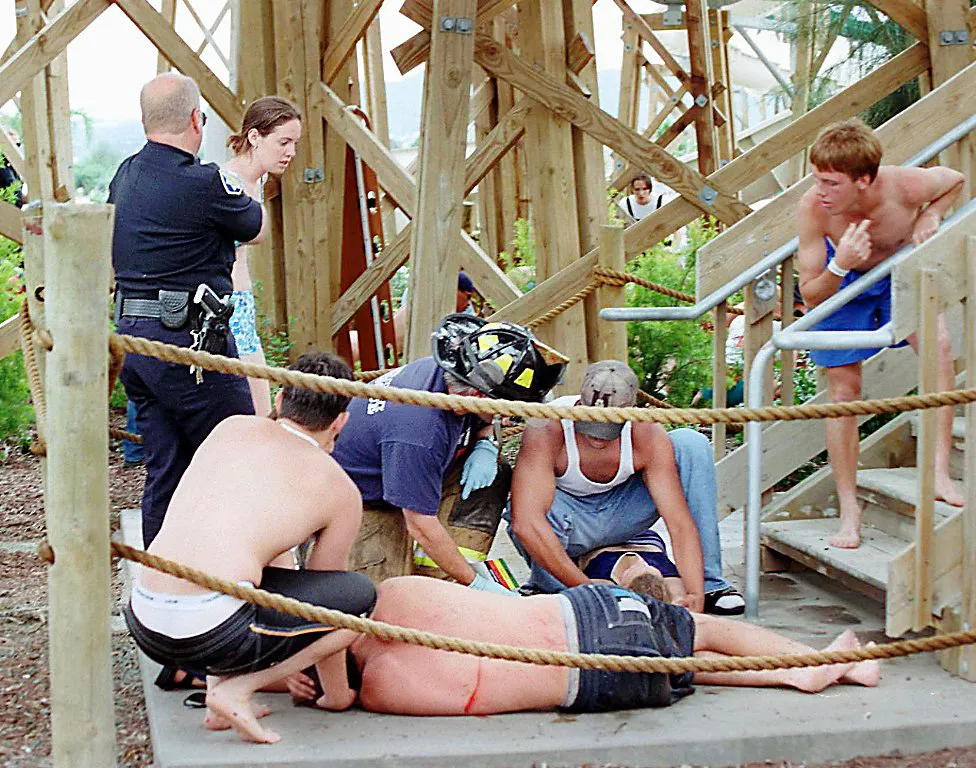
In total, 32 students were injured in the collapse.
Many suffered:
Several were listed in critical condition immediately after the accident.
But the most devastating outcome was the loss of one life.
Quimby Ghilotti, an 18-year-old senior, was killed in the collapse.
Witnesses reported she fell headfirst and was unresponsive almost immediately.
She had been just days away from graduation.

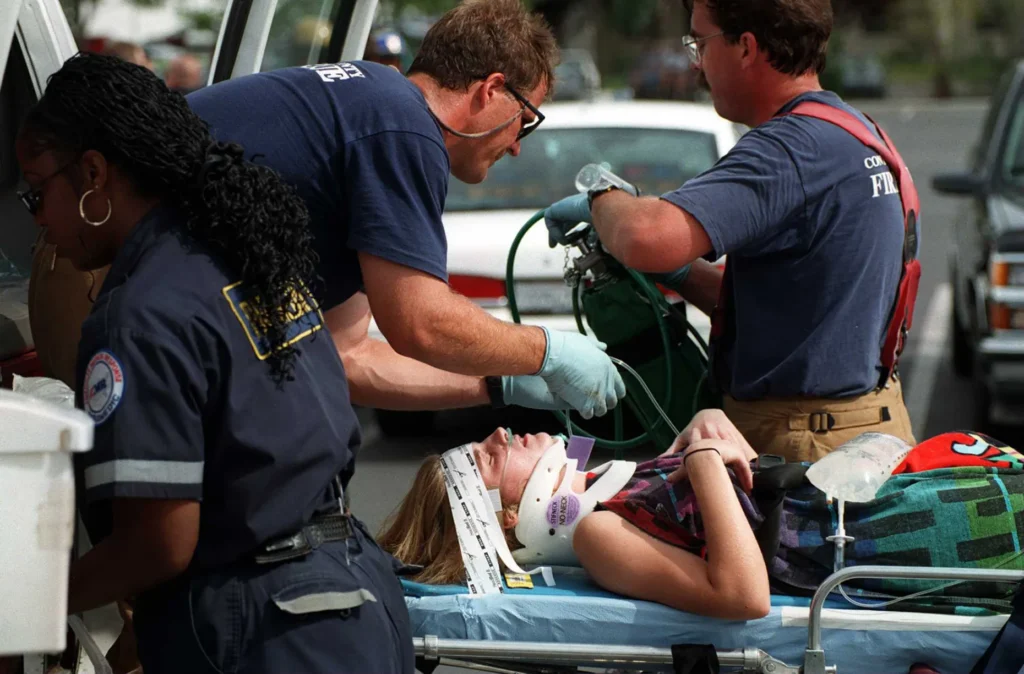
Emergency services rushed to the scene within minutes.
Ambulances transported injured students to nearby hospitals, while park staff attempted to secure the area and assist victims.
Parents were notified as chaos unfolded—many learning their children had been injured in a freak accident during what was supposed to be a supervised school outing.
The park was shut down immediately.
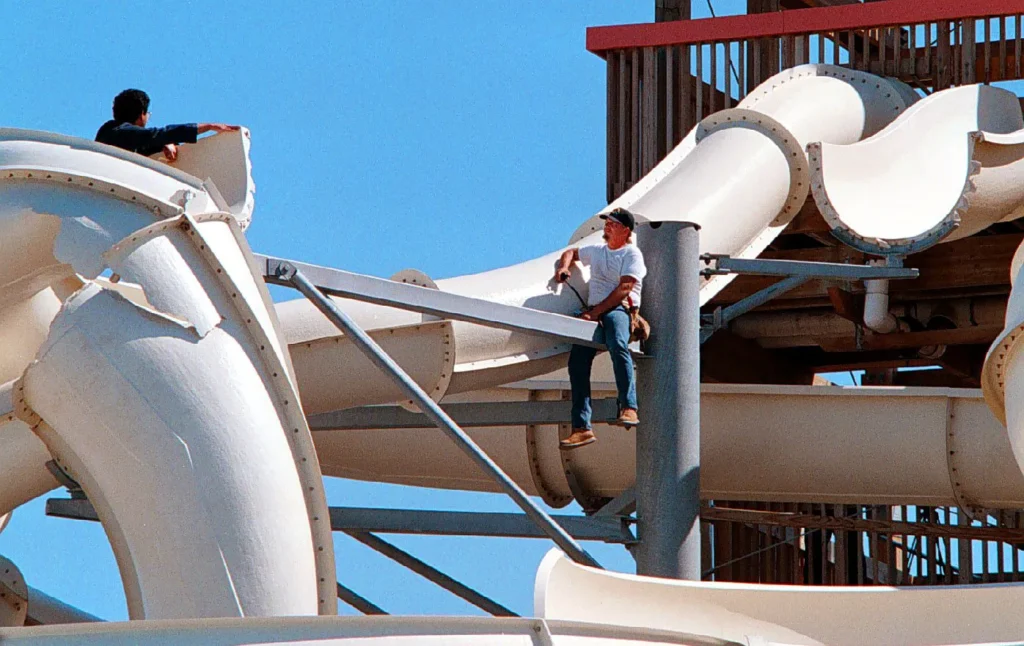
In the days following the Concord water park disaster, investigators began piecing together what went wrong.
The initial explanation from park officials was clear:
The slide collapsed because it was overloaded.
Students had ignored safety rules and overwhelmed staff in their attempt to ride together.
However, questions quickly emerged.
Experts noted that—even under unusual stress—a properly engineered structure should not catastrophically fail in this way.
Investigators examined:
While the students’ actions were a major factor, scrutiny also fell on the park’s design and ability to handle large crowds.
The aftermath extended far beyond the day of the disaster.
Families of the victims filed lawsuits against:
In 1999, a settlement of over $4 million was reached for several injured students and victims’ families.
Some of the injured suffered lifelong consequences, including permanent physical damage.
Shockingly, the park did not remain closed for long.
Less than two weeks after the disaster, Waterworld USA reopened following safety inspections.
Officials stated that the park was safe, emphasizing that the tragedy was caused by misuse of the ride rather than inherent danger.
Still, for many, the reopening felt too soon.
The Concord water park disaster became a case study in:
It also highlighted a harsh reality:
Even a moment of reckless decision-making—especially in a group setting—can have irreversible consequences.
For the families affected, the impact never faded.
Quimby Ghilotti’s death remains the defining tragedy of the incident—a reminder of how quickly celebration can turn into catastrophe.
The Concord water park disaster wasn’t caused by a single failure.
It was the result of multiple factors converging at once:
It only took seconds for everything to go wrong.
And decades later, it still stands as one of the most chilling amusement park accidents in U.S. history.